Turn any book into a language lesson
I always loved learning languages. As a kid, sometimes I'd open a dictionary at a random page and just start reading it top to bottom.
These days, I've traded the dictionary for something more effective — immersing myself in content, building vocabulary naturally, then figuring out the grammar.
Here's where it gets tricky: sourcing that content.
Sure, you can lean on YouTube with subtitles (though that requires some existing skill), read adapted texts like Simple English Wikipedia or books for children, or use gamified apps like Duolingo.
I'd rather read real stories, though. Great works of literature in the native language, actual local news, message boards full of internet slang. No children's books.
Translating books and articles word by word? It's tough. Just watching videos with subs? Not enough brainwork to make it stick.
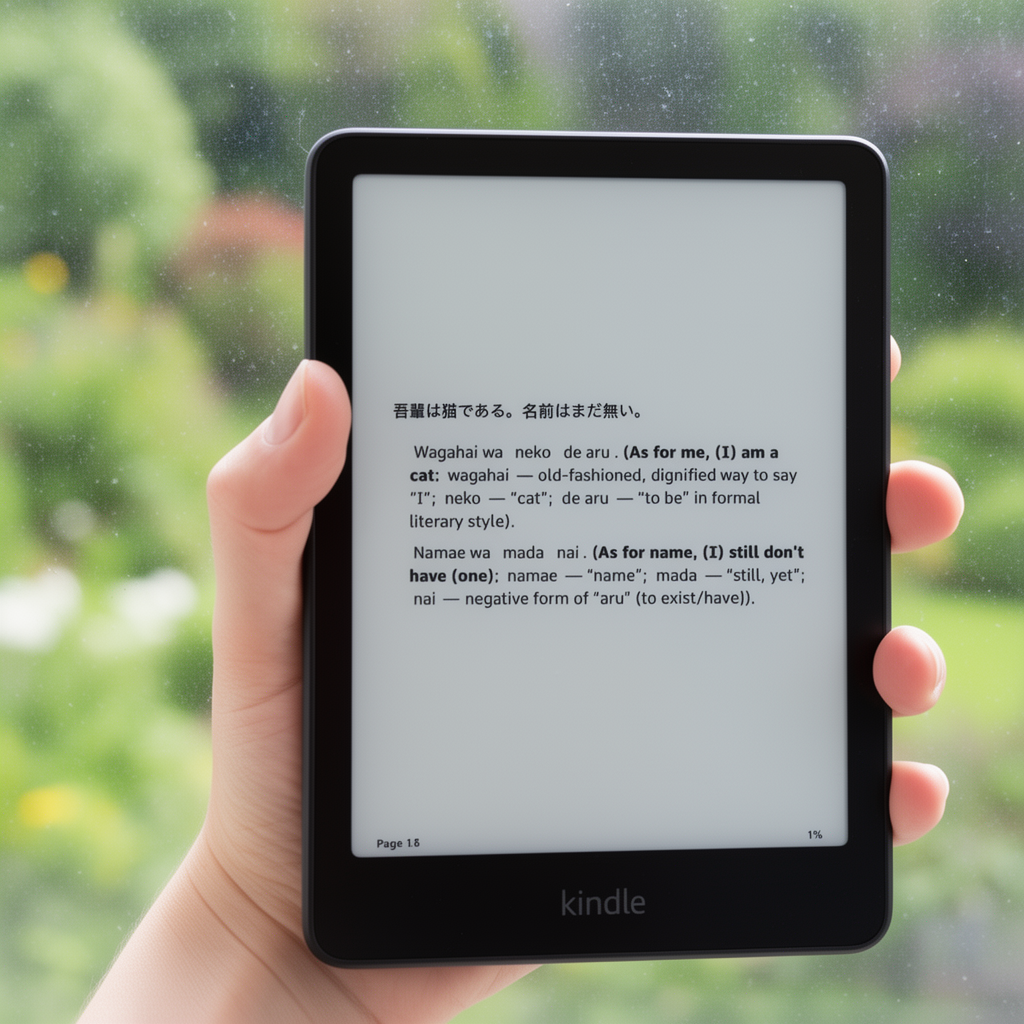
Enter the middle ground: interlinear translations. A Russian publisher named Ilya Frank built a whole library around this idea — original text stays untouched, translations and explanations tucked into parentheses and key vocabulary highlighted. You just… read.
This saves you from constant Googling and makes reading feel more natural, top to bottom. You can do it on your Kindle without needing to reach for your phone every time you encounter an unfamiliar word.
The biggest challenge is finding content like this. That's where modern LLMs come in, they handle interlinear translations well enough to be useful.
The beauty of this language learning method? You pick the material. I might grab a transcript from a YouTube video, study it first, then watch with context — pulling out vocabulary I can actually use. Or I'll take a book I want to read and have an LLM annotate it.
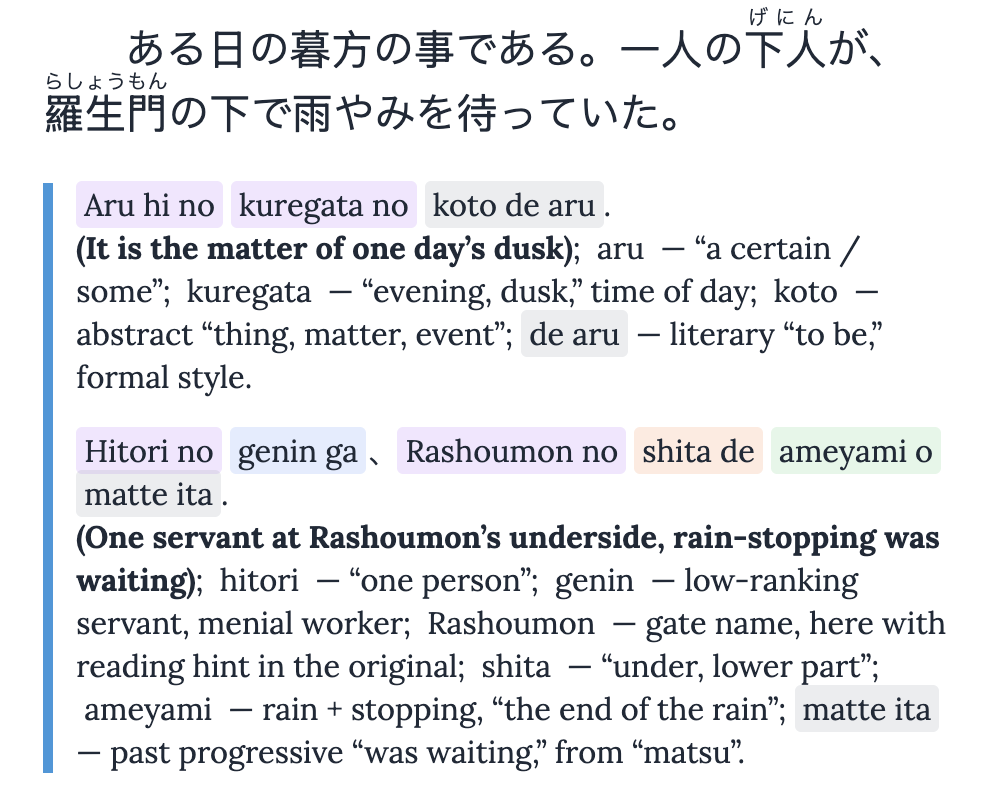
But manually feeding text into a model piece by piece breaks the immersion. It turns reading into data entry.
So I built Vestigeon to automate the workflow. Just upload any text and get an annotated ebook back instantly — ready for your Kindle or e-reader.
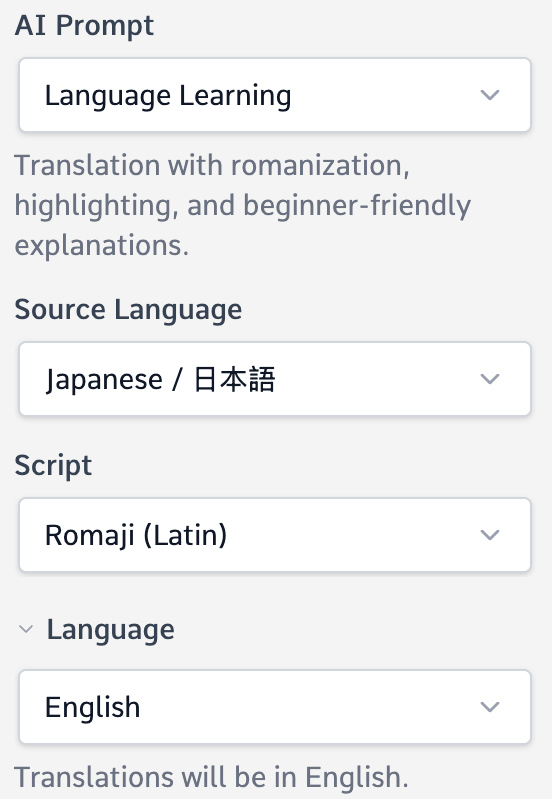
You get full control over the translation process — choose your source and target languages, and customize options like Romanization for Japanese or Korean to match your skill level.
I went with a Bring Your Own Key (BYOK) approach. Why? Because models aren't interchangeable. I've found significant differences in output between Gemini, Claude, and GPT — not necessarily in quality, but certainly in style. OpenRouter rounds out the lineup, with a catalog that occasionally surfaces high-quality free models on a promotional run.
You decide the trade-off. Maybe you like how Gemini is more expressive, while GPT leans technical. Or maybe simpler texts don't need a $5 per million input tokens model when a cheaper one gets the job done. You control the spend.
So what does this cost? A typical novel runs anywhere from $1–10 depending on the model. I put some work into keeping that down. The LLM reads the book alongside you, but it doesn't keep the full history in context — instead, it works off a rolling summary of what it's already explained. Same continuity, fraction of the tokens. For Anthropic models, I also use prompt caching, which makes each subsequent chunk cheaper to process. (GPT and Gemini handle this automatically.)
From personal experience — complex content like this takes longer to absorb anyway — meaning you get a lot of mileage for your buck.
Beyond language learning, Vestigeon includes a free Clarify & Explain mode. It annotates books with definitions and insights, inspired by Andrej Karpathy's approach. But that's a story for another post.
Thanks for reading this far — I'd love for you to give Vestigeon a try.